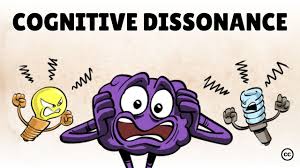
Cognitive dissonance occurs when we try to reduce the psychological discomfort we feel when confronted with something that questions our beliefs and actions.
Children experience this a lot.
A good example might be when a child believes that cheating in a game is bad but takes a peek during a competitive card game with the rationale : everyone else does it!
Back in daily life this can occur regularly as children learn and grow. To admit that your parent is right about something is very difficult. Nobody wants to hear an I told you so!
It’s tempting to alleviate this sense of unease by provoking an argument and children need to be coached through this. It’s OK to be wrong about something, is the message.
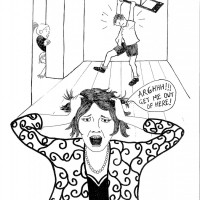
Adults also find this difficult and as parents we experience this state frequently.
Admitting you are wrong takes a lot of confidence and a robust sense of self.